


Artifact density
ResourceCheap artifacts, artifact creatures, and utility pieces make affinity, cost reduction, tap abilities, and artifact-count payoffs credible.
Sol RingArcane SignetFoundry InspectorEtherium Sculptor
Strategy Intelligence
Artifact Engine decks develop artifacts, convert them into resources or triggers, rebuild the engine, and turn that loop into cards, mana, damage, counters, copied threats, or a win.
What Changed
Artifact Engine sits between the broad Artifacts Matter Theme and the mechanics that make artifact decks generate mana, cards, copied threats, recursion, counters, or sacrifice value.
Driver: Artifact-centered commanders, precons, mechanics, and support packagesStrategy Sequence
The deck starts by adding cheap artifacts, artifact creatures, tokens, or utility pieces that can be counted, tapped, copied, sacrificed, or returned later.
Artifacts become mana, cards, damage, copied permanents, graveyard setup, or cost reduction instead of sitting on the board as generic permanents.
Recursion, copy effects, and commanders that reuse artifact cards let spent pieces become another pass through the same engine.
The engine turns artifact count, artifact entries, counters, or copied artifacts into board pressure, repeatable triggers, or a larger resource turn.
The deck wins by converting the established artifact loop into damage, copied threats, Construct pressure, combo material, or repeated card and mana advantage.
Active Drivers
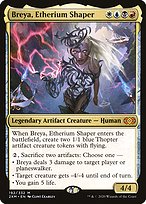
Breya creates artifact creature tokens and sacrifices artifacts for damage, removal, life, and combo pressure, making artifact conversion the deck's engine.
Open commander intelligence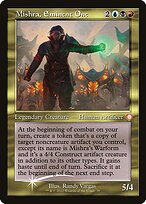
Mishra turns noncreature artifacts into temporary Construct artifact creature copies, so artifact entries, activations, sacrifice timing, and recursion become the value engine.
Open commander intelligence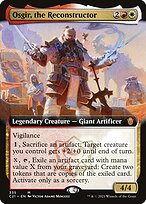
Osgir sacrifices artifacts, stocks the graveyard, then copies artifact cards from exile, making spent artifacts become another resource loop.
Open commander intelligence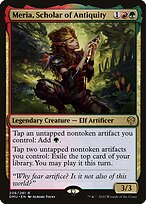
Meria turns untapped nontoken artifacts into green mana and temporary card access, making cheap artifact density the resource engine.
Open commander intelligence
Ultron converts nontoken artifact entries into Robot Villain copies, linking artifact density, copied threats, recursion, and sacrifice checks.
Open commander intelligence
The Fantasticar connects cheap artifacts, cost reduction, untap-style resource turns, recursion, sacrifice lines, and Construct finishers.
Open commander intelligenceDeck Intelligence
The deck is built around making artifacts, reusing artifacts, and turning artifact count into battlefield or combo value.
CommanderMeria, Scholar of AntiquityThe support package cares about artifact count, untap effects, artifact lands, and engine pieces that keep cards flowing.
CommanderOsgir, the ReconstructorThe deck reconstructs artifacts, doubles useful pieces, and turns artifact sacrifice into a value engine.
CommanderThe FantasticarIts support cards point toward artifact spell chains, big mana, recursion, and Construct finishers.
CommanderUrza, Chief ArtificerConstruct scaling, affinity, and artifact-token production make the deck a clean artifact-engine commander.
CommanderMishra, Eminent OneThe deck uses artifacts as repeatable engine material, but copy timing and version checks still need card-by-card review.
Resource Model
Cheap artifacts, artifact creatures, and utility pieces make affinity, cost reduction, tap abilities, and artifact-count payoffs credible.
Thopters, Constructs, Robots, Treasure, Clue, Food, and artifact copies can be counted, sacrificed, tapped, or converted.
Sacrificed, copied, or discarded artifacts become material for recursion, Osgir-style reconstruction, Breya conversion, or Scrap Trawler loops.
Payoff Model
Meria-style tap engines, Clue and Treasure packages, and cost reducers let artifact density become another spell or another card.
Breya, Krark-Clan Ironworks, and artifact death loops turn disposable artifacts into damage, mana, removal, or combo material.
Mishra, Ultron, Osgir, and recursion tools reuse the same artifacts so one support package can create repeated triggers or threats.
Proliferate matters when the artifact engine already places charge, oil, modular, +1/+1, or other counters on permanents.
Cards To Check
KCI turns artifacts into mana and combo material, so seller depth and exact printing matter when artifact-sacrifice engines get attention.
Pricing ConfidenceRecursionScrap TrawlerScrap Trawler makes sacrificed or destroyed artifacts replace themselves with smaller artifacts, keeping artifact loops moving.
Demand DriverRecursionGoblin WelderGoblin Welder swaps artifacts between battlefield and graveyard, so artifact decks can reuse spent pieces or cheat larger targets into play.
Inventory WatchRecursionEmry, Lurker of the LochEmry converts artifact density into self-mill and repeatable artifact casting from the graveyard.
Market ActivePayoffSai, Master ThopteristSai turns artifact casting into Thopter bodies and can sacrifice artifacts for cards, bridging token production and resource conversion.
Demand DriverCore EngineThopter FoundryThopter Foundry converts artifacts into artifact creature tokens and life, making disposable artifacts into repeatable material.
Supply ResponseEnablerFoundry InspectorFoundry Inspector makes artifact chains easier to assemble when a deck wants several artifacts in the same turn.
Inventory WatchEnablerEtherium SculptorEtherium Sculptor is a cheap cost reducer for artifact-heavy turns, but version and supply checks matter before reading it as broad demand.
Pricing Confidence9 more reviewed Artifact Engine cards are kept out of the default view.
Market Signals
Cards where the reviewed relationship includes commander or package demand context.
Cards where seller depth should be checked before trusting a move.
Version-sensitive cards where exact printing and finish matter.
Contextual artifact pieces stay out of headline conclusions until the data improves.
Versions To Check
Separate precon copies, old printings, premium treatments, and normal copies before comparing prices. Artifact staples often have many reprints, so price trust depends on exact printing, finish, seller depth, and recent sales. Commander-specific support should not be treated as broad artifact-engine demand unless multiple commanders or reports point to the same card.
KCI turns artifacts into mana and combo material, so seller depth and exact printing matter when artifact-sacrifice engines get attention.
Check versionsInventory WatchGoblin WelderGoblin Welder swaps artifacts between battlefield and graveyard, so artifact decks can reuse spent pieces or cheat larger targets into play.
Check versionsMarket ActiveEmry, Lurker of the LochEmry converts artifact density into self-mill and repeatable artifact casting from the graveyard.
Check versionsInventory WatchFoundry InspectorFoundry Inspector makes artifact chains easier to assemble when a deck wants several artifacts in the same turn.
Check versionsPricing ConfidenceEtherium SculptorEtherium Sculptor is a cheap cost reducer for artifact-heavy turns, but version and supply checks matter before reading it as broad demand.
Check versionsPricing ConfidenceUrza's SagaUrza's Saga scales with artifact density and finds key cheap artifacts, but format demand and versions must be separated from Commander-only artifact demand.
Check versionsPricing ConfidenceMishra's WorkshopMishra's Workshop is a high-sensitivity artifact mana reference where old-condition and marketplace agreement matter more than broad strategy membership.
Check versionsReprintSol RingSol Ring is artifact material in many decks, but demand checks must separate precon copies, premium versions, and ordinary Commander usage.
Check versionsRelated Intelligence
Related Intelligence
Related Intelligence
Freshness
No fresh market change is confirmed yet.
Previous comparison is not available yet. Showing the latest confirmed intelligence.
Core Artifact Engine Packages
Cheap artifacts, artifact creatures, and utility artifacts give the deck material to count, tap, copy, sacrifice, recur, or reduce costs.
Thopters, Constructs, Robots, Treasure, Clue, Food, and artifact copies become bodies, mana, sacrifice fuel, or artifact-count pressure.
Sacrifice outlets convert artifacts into damage, mana, removal, cards, graveyard setup, or combo material.
Artifact recursion and reconstruction let spent cards become another pass through the engine.
Cost reducers and affinity-style checks turn artifact density into larger turns without treating every mana rock as a signal.
Proliferate and other counter tools support Artifact Engine only when the deck already places counters on artifacts or related permanents.
Connected Mechanics