
Clavileno and the Vampire sacrifice package give Aristocrats a visible precon upgrade lane, but there is no dedicated public precon page yet.
Tracked relationshipStrategy Intelligence
Aristocrats
Aristocrats decks create disposable resources, sacrifice them for value, and turn death triggers, recursion, or repeated drain effects into a winning engine.
- Reviewed commanders
- 15Approved relationships
- Strongest lane
- Sacrifice Value Engines
- Market Signals
- 8
- Updated
- Updated Jul 16, 2026
What Changed
No broad Aristocrats market move is confirmed yet
Updated Jul 16, 2026
No fresh market change is confirmed yet. This page is tracking Aristocrats because multiple commanders, themes, mechanics, and sacrifice packages are connected.
Driver: Reviewed commanders, themes, mechanics, and sacrifice packagesTrendWatchingNo current trend row
Cards to Watch22Related cards
Market Signals9Active related signals
Strategy Sequence
Create, sacrifice, trigger, rebuild, convert
- 01
Create
Resource setupDisposable creatures, tokens, Treasure, Food, Blood, and recursive bodies give the deck material it can afford to lose.
- 02
Sacrifice
Timing controlFree or repeatable outlets let the pilot choose when resources die instead of waiting for combat or removal.
- 03
Trigger
Value conversionDeath payoffs turn those losses into drain, damage, cards, mana, counters, removal pressure, or graveyard setup.
- 04
Rebuild
Recovery loopRecursion and replacement effects keep the engine from spending every resource only once.
- 05
Convert
Finish lineRepeated triggers become a decisive advantage through life drain, Treasure loops, board control, or a protected combo turn.
Active Drivers
What is driving this strategy?
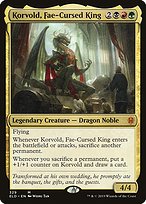
Sacrifice value engines
Korvold, Fae-Cursed King
Korvold draws cards and grows whenever a permanent is sacrificed, making fodder, Treasure, Food, and recursive sacrifice packages the core plan.
Open commander intelligence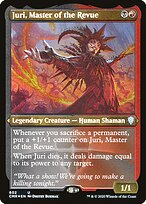
Life-drain Aristocrats
Juri, Master of the Revue
Juri rewards repeated sacrifice with counters and a death trigger, so the deck naturally wants fodder, outlets, drain payoffs, and controlled sacrifice timing.
Open commander intelligence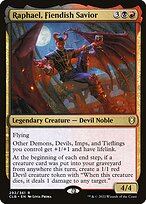
Fiend Aristocrats
Raphael, Fiendish Savior
Raphael rewards creature cards entering your graveyard during each turn, creates Devil tokens at end step, and converts those bodies through sacrifice outlets, death triggers, Fiend support, and recursive creature engines.
Open commander intelligence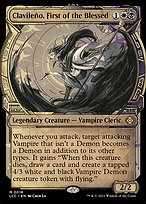
Typal Aristocrats
Clavileño, First of the Blessed
Clavileño converts one eligible attacking Vampire into a delayed death package, then rewards sacrifice outlets, death payoffs, and Vampire Demon token production.
Open commander intelligence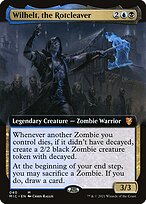
Zombie death replacement
Wilhelt, the Rotcleaver
Wilhelt converts non-decayed Zombie deaths into decayed replacements, then turns Zombies into end-step cards, drain payoffs, sacrifice loops, and graveyard-cast combo infrastructure.
Open commander intelligence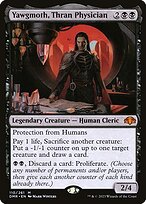
Sacrifice-control engines
Yawgmoth, Thran Physician
Yawgmoth combines a free creature-sacrifice outlet, mandatory card draw, life payment, -1/-1 counters, and undying-reset combo infrastructure in the command zone.
Open commander intelligenceResource Model
What gets sacrificed
Creature tokens
ResourceTokens are the cleanest fuel because they can die without spending cards from hand.
Vampire tokensZombie tokensSquirrel tokens
Recursive creatures
ResourceRepeatable bodies make sacrifice outlets believable across longer games.
GravecrawlerReassembling SkeletonMeren recursion
Artifact resources
ResourceTreasure, Food, Blood, Clues, and artifact bodies matter when the deck can sacrifice more than creatures.
TreasureFoodClues
Spent board pieces
ResourceCreatures already exposed to removal can become cards, mana, or death triggers before they leave anyway.
Village RitesDeadly DisputeSkullclamp
Payoff Model
What the deck gains
Life drain
PayoffBlood Artist and Zulaport-style effects pressure the table without needing combat damage.
Card velocity
PayoffSacrifice draw turns expendable bodies into fresh looks and helps the deck find the missing engine piece.
Mana conversion
PayoffTreasure payoffs can turn death loops into mana for recursion, finishers, or commander recasts.
Board control
PayoffDictate-style effects and sacrifice damage convert the same death triggers into pressure on opposing boards.
Cards To Check
Limited Aristocrats cards to verify
EnablerViscera Seer
Free creature sacrifice makes death timing controllable and turns fodder into card selection.
QuietEnablerCarrion FeederA one-mana free outlet that grows as creatures die, making it a clean Aristocrats engine piece.
QuietCore EngineYawgmoth, Thran PhysicianCombines sacrifice, card draw, counters, and combo pressure in one engine card.
Pricing ConfidenceEnablerGoblin BombardmentConverts every expendable creature into damage while triggering death payoffs.
Market ActivePayoffZulaport CutthroatTurns your creature deaths into table-wide drain and stabilizing life gain.
QuietPayoffBlood ArtistRewards any creature dying, which makes opposing removal and board wipes part of the drain math.
Pricing ConfidenceCard AdvantageSkullclampTurns disposable one-toughness creatures and tokens into cards, making fodder materially valuable.
Pricing ConfidenceResource GenerationPitiless PlundererTurns dying creatures into Treasure, helping loops pay for recursion and finishers.
Demand Driver14 more reviewed Aristocrats cards are kept out of the default view.
Market Signals
What the current data can support
Cards where the reviewed relationship includes demand-driver context.
Cards where supply should be checked before treating the move as believable.
Version-sensitive cards where exact printing and finish matter.
Contextual cards stay out of headline conclusions until the data improves.
Versions To Check
Separate unlike copies before trusting prices
Check the exact printing and finish before comparing listings. This market signal can be limited to specific versions, old copies, precon copies, foils, promos, or recent reprints. CardTrader inventory and TCGplayer pricing should be checked separately before trusting one headline price.
Pricing ConfidenceYawgmoth, Thran Physician
Combines sacrifice, card draw, counters, and combo pressure in one engine card.
Check versionsMarket ActiveGoblin BombardmentConverts every expendable creature into damage while triggering death payoffs.
Check versionsPricing ConfidenceBlood ArtistRewards any creature dying, which makes opposing removal and board wipes part of the drain math.
Check versionsInventory WatchOphiomancerProduces repeatable disposable bodies for sacrifice outlets without needing a typal shell.
Check versionsPricing ConfidenceSkullclampTurns disposable one-toughness creatures and tokens into cards, making fodder materially valuable.
Check versionsReprintVictimizeSacrifices one creature to return two, converting fodder into a graveyard recovery swing.
Check versionsPricing ConfidenceLiving DeathCan reset the table while returning your sacrificed board, making graveyard setup matter.
Check versionsInventory WatchMikaeus, the UnhallowedUndying support lets creatures pass through sacrifice engines repeatedly, including combo lines.
Check versionsRelated Intelligence
Themes supporting this strategy
Related Intelligence
Typals using this strategy
Related Intelligence
Related intelligence
Check Next
Related Market Guides
Compare Aristocrats commanders, typal overlaps, artifact-sacrifice themes, card-level version checks, and current market reports.
Freshness
Meaningful change history
No fresh market change is confirmed yet.
Previous comparison is not available yet. Showing the latest confirmed intelligence.
Core Aristocrats Packages
Core packages, not every sacrifice card
Sacrifice outlets
Core PackageFree or repeatable outlets let Aristocrats decks choose when creatures die and turn removal windows into value.
Disposable creatures and tokens
Core PackageRecursive creatures and expendable tokens supply the bodies that keep sacrifice engines moving.
Death-trigger payoffs
Core PackageDrain, damage, card draw, and counter payoffs make each creature death matter.
Card-advantage conversion
Support PackageDraw engines turn disposable creatures into fresh cards instead of only board presence.
Mana conversion
Support PackageTreasure and mana engines help sacrifice loops pay for recursion, payoffs, and finishers.
Graveyard recursion
Support PackageRecurring creatures or permanents lets the same resource pass through sacrifice outlets more than once.
Engine protection
Adjacent PackageProtection and recovery keep multi-piece engines from folding to one removal spell or board wipe.
Connected Themes
Themes connected to Aristocrats
Connected Mechanics
Mechanics powering Aristocrats
Connected Typals