
Masterminds
Villains whose appeal comes from planning, manipulation, or building an engine around several moving pieces.
- Commanders
- 1
- Cards
- 3
Theme Intelligence
Commander cards and support cards where the character identity is a reviewed villain signal, not just a mechanical fit.
What Changed
Marvel Commander interest is making named villains easier to search and harder to lump into generic typal pages.
Driver: Character RoleTheme Map
Villains whose appeal comes from planning, manipulation, or building an engine around several moving pieces.
Commanders and characters built around domination, inevitability, and large-board pressure.
Villains that reward theft, copying, deception, or changing the rules of a game state.
Leaders whose villain identity is tied to command, taxation, sacrifice, or control of a realm.
Villains that turn graveyards, death, or recursion into the central story of the card.
Large-scale antagonists whose appeal comes from universe-level stakes or overwhelming presence.
Villains tied to invasion, conquest, assimilation, or organized hostile forces.
Machine villains and synthetic threats that turn artifact identity into character identity.
Active Drivers

Doctor Doom is the cleanest launch anchor because the deck demand combines Latveria, discard, recursion, and a named villain identity.
Open commander intelligence
Loki searches are character-led, while gameplay interest checks theft, copying, and deception-style support.
Open commander intelligence
Thanos demand should be read as cosmic-villain demand before it is reduced to artifacts or control shells.
Open commander intelligence
Ultron is both an artifact commander and a character-driven machine-villain page, so Theme and Strategy signals stay separate.
Open commander intelligence
The Serpent Society gives the page a villain-team branch where the group identity is stronger than a single mechanical label.
Open commander intelligence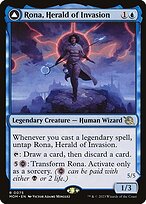
Rona brings the invasion branch into the pilot without making every Phyrexian or invasion card a Villains Theme card.
Open commander intelligenceMarvel releases can create character-led demand before individual card data stabilizes.
Tracked sourceDoom Prevails is the cleanest sealed-product context for Doctor Doom and related villain demand.
Tracked sourceSealed Commander products can absorb demand from players who want the character shell before singles settle.
Tracked sourceDeck Intelligence
Absorbing Man is tracked as a Villain commander first; copy-target and market checks should stay tied to that deck identity before any card move is treated as broad demand.
CommanderDoctor Doom, King of LatveriaDoctor Doom carries the Villain identity on the page, but card-level demand still needs to be separated from broader character interest.
PreconDoom PrevailsDoom Prevails is the Villain precon, with Doctor Doom, Loki, and named Villain cards carrying the deck identity.
CommanderLoki, the DeceiverLoki wants Villains worth copying and rewards lists that can turn named Villain bodies into repeated value.
CommanderUltron, Artificial MalevolenceUltron is a Villain commander, so Villain deck context should frame early support-card checks before market claims get stronger.
Cards To Check
Versions
Related Intelligence
No related intelligence is connected yet.
Freshness
No fresh market change is confirmed yet.
Previous comparison is not available yet. Showing the latest confirmed intelligence.