Can deathtouch become removal?
Hit-Monkey already has deathtouch, so bite and fight effects can turn a small commander into repeatable creature control.
Commander Watch
Hit-Monkey already brings haste, vigilance, reach, deathtouch, hexproof, and can't be countered. The cards to check are bite spells, trample, first strike, double strike, mutate cards, Auras, Equipment, and combat-damage draw that turn one attacker into a real clock.
Why This Matters
Gameplay, Commander, competitive formats, mechanics, staples, and deckbuilding angles.
Commander players should check whether Hit-Monkey lists repeat Ram Through, Spinning Wheel Kick, Rancor, Shadowspear, Power Fist, Chariot of Victory, Genji Glove, Bear Umbra, Brotherhood Regalia, and Toski.
Cards to Check
Hit-Monkey's own price is only part of the read. The better early market check is whether the same bite spells, trample cards, double-strike pieces, Auras, Equipment, and combat-damage draw cards keep showing up together.
Hit-Monkey already has deathtouch, so bite and fight effects can turn a small commander into repeatable creature control.
Trample is the first keyword to check because deathtouch only needs one damage assigned to each blocker.
First strike and double strike matter because deathtouch damage happens before normal combat damage or happens twice.
Mutate cards are narrower, but they can add stats or combat pressure while keeping Hit-Monkey's keyword package on the stack.
Auras matter when they add trample, untap mana, or protect the single-threat plan without making the deck too fragile.
Equipment is the cleaner market check because many pieces are reusable, version-sensitive, and already have Commander demand.
Hit-Monkey can force awkward blocks, but combat-damage draw decides whether the Voltron plan keeps enough cards in hand.
Saryth and Thrun are not Hit-Monkey replacements. They are comparison points for green decks that protect a creature and win through combat.
Related Cards

Uses Hit-Monkey's deathtouch to pick off a creature, then trample can turn excess damage into player damage.
Ram Through is the clean bite-spell check because it cares about both deathtouch and trample.
This has common-printing supply, so look for premium or low-seller rows before treating a move as meaningful.

Can make Hit-Monkey fight while also functioning as a tutor or land spell in other games.
Charm is a stronger card than a normal bite spell, but it already has demand outside Hit-Monkey.
Compare Hit-Monkey attention against existing green Commander demand before crediting one deck.

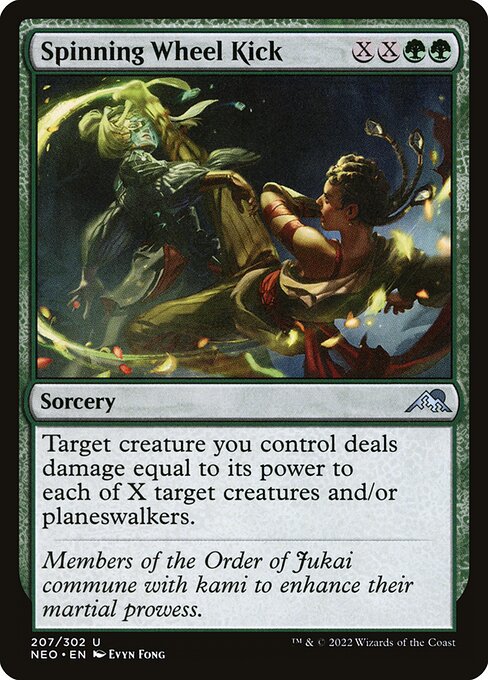
Scales with mana and lets a deathtouch commander clear several creatures in one turn.
Kick is splashier than efficient; it matters if lists want one-card board cleanup.
Kamigawa supply may be broad. Check whether listings are actually selling, not just relisted.

Gives the Marvel deck a themed fight effect that lines up with deathtouch combat.
This is a flavor-forward support check unless repeated lists keep it over older green fight spells.
Release-week Marvel rows need exact set, collector number, finish, and inventory checks.

Adds trample for one mana and returns to hand, which is exactly the kind of low-cost pressure Hit-Monkey wants.
Rancor is the first trample check because it makes deathtouch blocking much worse.
Many versions exist. Watch old-border, foil, and cleaner-condition rows separately from bulk copies.

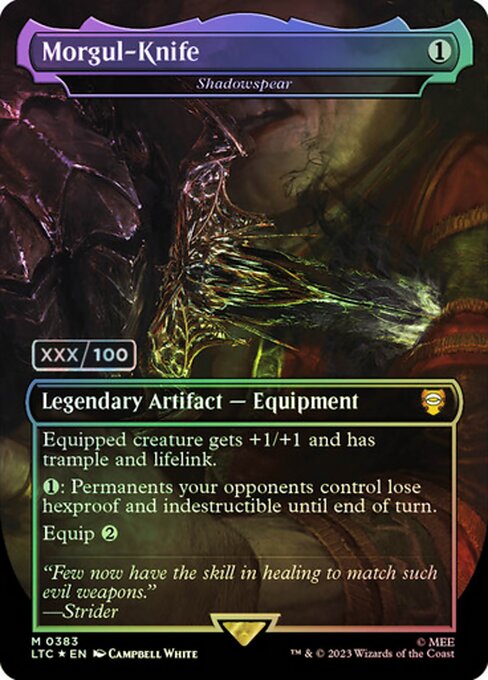
Adds trample and lifelink while also answering opposing hexproof or indestructible protection.
Shadowspear is strong on its own, so it is a useful but noisy Hit-Monkey signal.
Broader Commander demand is already present; compare inventory movement against other Voltron decks.

Adds trample and power in the same Marvel release window as Hit-Monkey.
Power Fist is a source-aware Marvel check, not a proven staple yet.
Separate release-week listing noise from real sold-copy demand.

Adds first strike and trample, two of the most important keywords for a deathtouch attacker.
Chariot is a compact keyword package for making blocks awful.
Check older inventory and condition before trusting a sudden listing gap.

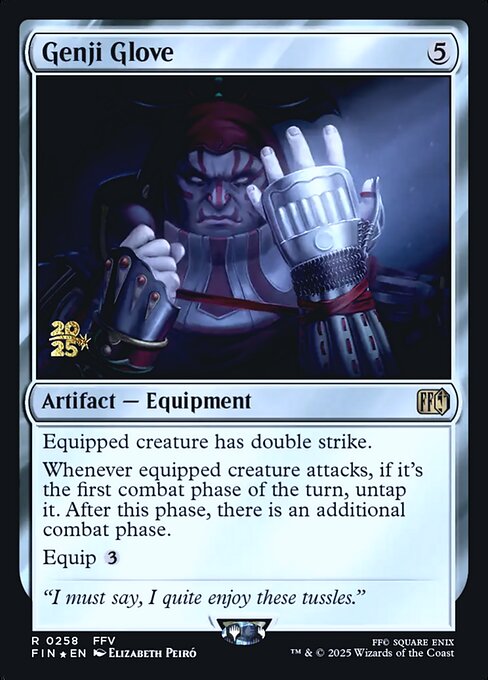
Double strike lets deathtouch combat happen in first-strike damage and again during regular damage.
Genji Glove is the double-strike version check, especially if Final Fantasy demand is already pulling copies.
Do not blend normal, foil, showcase, and special treatment rows when checking the price.

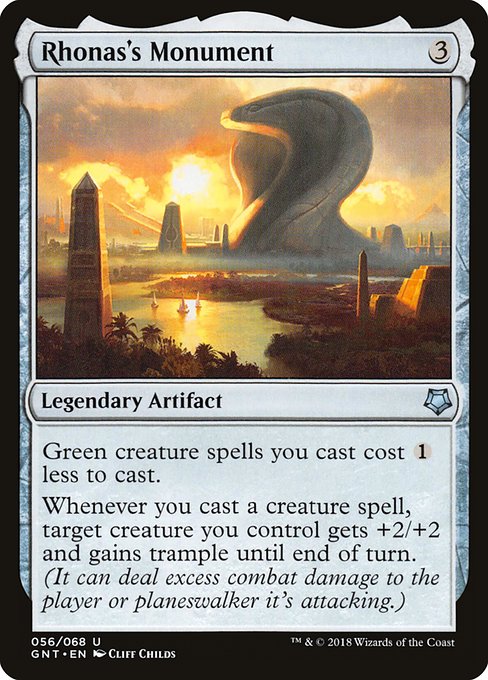
Reduces green creature costs and can give trample during the turn the deck commits another creature.
Monument matters if lists are creature-heavy instead of pure Aura and Equipment Voltron.
Amonkhet-era supply can be uneven. Check seller depth before treating it as a strong move.

Can mutate onto a hard-to-remove commander while adding a land-search trigger.
Greathorn is a niche role player only if the deck leans into mutate.
Treat mutate movement as deck-count evidence first; most copies should stay cheap.

Can turn repeated mutate casts into permanents while keeping Hit-Monkey's keyword stack relevant.
Starrix is a high-ceiling mutate check, but it is not a default Voltron card.
A move needs repeated list overlap because this is narrower than trample or Equipment support.

Protects through totem armor and untaps lands after the attack connects.
Bear Umbra helps the deck keep mana up after committing to one attacker.
Older and premium copies can move differently; verify exact version and inventory.

Adds a Marvel-source Aura to the Voltron package and can make the single attacker harder to ignore.
Super State should be checked as a Marvel release-week Aura, not as confirmed staple demand.
Use source timestamp, set code, collector number, finish, and live inventory before trusting a price.

Adds a premium Equipment angle for decks trying to build one protected attacker.
The Masamune is a version-sensitive Equipment check, not a pure Hit-Monkey card.
Final Fantasy variants and premium treatments need separate rows.

Helps one creature connect and protects the combat plan from some blockers.
Regalia matters if Hit-Monkey lists need evasion more than raw stats.
This already has Commander use; check whether Hit-Monkey adds real incremental demand.

Turns a cheap commander into a fast clock as lands pile up.
Blackblade is the simple power check, especially if trample is already handled elsewhere.
Many printings and broad Commander demand make this a noisy signal.

Can combine card advantage with creature-based removal in a deck already built around combat.
Hunter's Talent is useful when the deck wants card flow without leaving the creature plan.
Check whether Bloomburrow supply is actually thinning before trusting a small move.

Rewards creatures dealing combat damage and is hard to counter, which fits a combat-heavy green shell.
Toski is broader than Hit-Monkey, but it is the clean combat-damage draw comparison.
Broad Commander demand means the useful check is seller depth and exact version, not one deck alone.

Gives untapped creatures hexproof and tapped creatures deathtouch, which overlaps with the protected-combat plan.
Saryth is a comparison point for how green decks protect key creatures.
Use it as context, not as proof that Hit-Monkey demand is moving this card.

Shows the older green pattern of winning through a hard-to-answer commander.
Thrun is not a replacement, but it is useful for comparing resilient mono-green attacker demand.
Older protected-commanders have their own demand; do not blend that with Hit-Monkey.
Budget Brews
Commander-specific cheap synergy, niche role players, and practical upgrades based on available price and synergy data.
Cheap cards that may overperform because they fit this commander's game plan.

Kick is splashier than efficient; it matters if lists want one-card board cleanup.

Greathorn is a niche role player only if the deck leans into mutate.

Starrix is a high-ceiling mutate check, but it is not a default Voltron card.

Hunter's Talent is useful when the deck wants card flow without leaving the creature plan.

Chariot is a compact keyword package for making blocks awful.

Monument matters if lists are creature-heavy instead of pure Aura and Equipment Voltron.
These are budget ideas from the same support packages, not strict one-for-one swaps.
Budget idea from the same bite spells support package.
Budget idea from the same first strike and double strike support package.
Budget idea from the same combat-damage draw support package.
Low-cost role players and niche cards that may be better here than they look.

Ram Through is the clean bite-spell check because it cares about both deathtouch and trample.

Saryth is a comparison point for how green decks protect key creatures.

Thrun is not a replacement, but it is useful for comparing resilient mono-green attacker demand.
If you decide to upgrade later, these are practical cards that could meaningfully improve the deck.
Related Reports
Sources
Treat this as Commander support-card demand first. Check exact printing, current inventory, deck-count overlap, and recent sales before buying or selling.